

%20{%20.f%20{%20fill:%20%23EE7466%20}%20.s%20{%20stroke:%20%23EE7466%20}%20}%3c/style%3e%3cdefs%3e%3cfilter%20id='ink-fav'%20x='-5%25'%20y='-5%25'%20width='110%25'%20height='110%25'%3e%3cfeTurbulence%20type='fractalNoise'%20baseFrequency='0.9'%20numOctaves='2'%20seed='7'%20result='n'/%3e%3cfeDisplacementMap%20in='SourceGraphic'%20in2='n'%20scale='2.2'%20result='d'/%3e%3cfeTurbulence%20type='fractalNoise'%20baseFrequency='0.05'%20numOctaves='3'%20seed='18'%20result='blot'/%3e%3cfeColorMatrix%20in='blot'%20type='matrix'%20values='0%200%200%200%200%200%200%200%200%200%200%200%200%200%200%200%200%200%20-1.5%201.62'%20result='m1'/%3e%3cfeTurbulence%20type='fractalNoise'%20baseFrequency='1.6'%20numOctaves='1'%20seed='12'%20result='grain'/%3e%3cfeColorMatrix%20in='grain'%20type='matrix'%20values='0%200%200%200%200%200%200%200%200%200%200%200%200%200%200%200%200%200%20-2.4%202.25'%20result='m2'/%3e%3cfeComposite%20in='m1'%20in2='m2'%20operator='arithmetic'%20k1='1'/%3e%3cfeComposite%20in='d'%20operator='in'/%3e%3c/filter%3e%3c/defs%3e%3cg%20filter='url(%23ink-fav)'%20transform='rotate(-6%2080%2080)'%3e%3ccircle%20class='s'%20cx='80'%20cy='80'%20r='69'%20fill='none'%20stroke-width='16'/%3e%3cpath%20class='f'%20d='M47.33%2044.42Q46.25%2041.94%2045.01%2040.64Q43.77%2039.35%2041.71%2038.75Q39.66%2038.16%2035.67%2037.84L35.67%2033.84L80.16%2033.84L80.16%2037.84Q74.11%2038.27%2071.85%2039.13Q69.58%2040%2069.58%2042.05Q69.58%2043.24%2070.23%2045.07L86.32%2089.57L86.97%2089.57L102.3%2049.61Q103.38%2046.8%20103.38%2044.75Q103.38%2041.83%20100.68%2040.27Q97.98%2038.7%2091.39%2037.84L91.39%2033.84L124.77%2033.84L124.77%2037.84Q119.69%2038.59%20117.15%2039.67Q114.61%2040.75%20113.05%2042.97Q111.48%2045.18%20109.65%2049.82L82.97%20118.08L77.79%20118.08L47.33%2044.42Z'/%3e%3c/g%3e%3c/svg%3e)
Charles X of France
Versailles, 9 Oct 1757 – Gorizia, 6 Nov 1836
10 facts3 sources
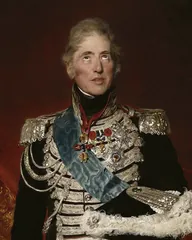
About Charles X
Charles X: the Bourbon succession and the July Revolution
AI-assisted · editedThe collection records Charles X’s birth in 1757 at Versailles. His parents were Louis, Dauphin of France, and Marie Josèphe of Saxony, placing him within the Bourbon dynasty at the heart of the French royal family. 1Birth · 9 Oct 1757, Versailles · Probable2Parent · Louis, Dauphin of France · Confirmed3Parent · Marie Josèphe of Saxony · Confirmed
Charles X ruled as King of France and Navarre from 1824 to 1830 and also held the title of French co-prince of Andorra. He succeeded his brother Louis XVIII. The July Revolution of 1830 forced his abdication and brought Louis Philippe, Duke of Orléans, to the throne. 4Title · King of France and Navarre, 1824–1830 · Confirmed5Title · French co-prince of Andorra, 1824–1830 · Confirmed6Known for · Charles X was King of France from 16 September 1824 until 2 August 1830. An uncle of the uncrowned Louis XVII and younger brother to former reigning kings Louis XVI and Louis XVIII, he supported the latter in exile. · Probable
He was the uncle of the uncrowned Louis XVII, the younger brother of Louis XVI and Louis XVIII, and supported Louis XVIII during exile. The collection records Charles X’s death in 1836 at Gorizia. 6Known for · Charles X was King of France from 16 September 1824 until 2 August 1830. An uncle of the uncrowned Louis XVII and younger brother to former reigning kings Louis XVI and Louis XVIII, he supported the latter in exile. · Probable7Death · 6 Nov 1836, Gorizia · Probable
Drafted with AI and edited against the archive. Open a citation to see the record, its sources and how certain it is.
Facts and their sources
- Born9 Oct 1757, VersaillesVerified · Vitrine1 source
- TitleFrench co-prince of Andorra, 1824–1830or King of France and Navarre, 1824–1830Verified · Vitrine1 source
- TitleKing of France and Navarre, 1824–1830or French co-prince of Andorra, 1824–1830Verified · Vitrine1 source
- Died6 Nov 1836, GoriziaVerified · Vitrine1 source
A life in time
9 Oct 1757
Born in Versailles
1775–1783
4 children are born
1824–1830
French co-prince of Andorra
1824–1830
King of France and Navarre
6 Nov 1836
Dies in Gorizia, aged 79
Family
See the treeParents
Partner
Children · 4
During his lifetime
He lived through 9 decades. Pick one to hear and see what it was like around Versailles.
General history, not a record about the family: each item says where it comes from.
The 1750s · Charles X is born in Versailles
What people wore
Cost of men's shoes
Men's shoes were considered expensive items, costing twice as much as those worn by women.
Getting around
Rapid descent by ramasse sled
When crossing the snowy Mount Cenis pass in the Alps, travelers could descend into Lanslebourg in just 15 minutes using a specialized sled called a ramasse.
At the table
Simple Meals of Bread and Soup
Ordinary meals typically consisted of bread dipped into soups made of boiled water, vegetables, or legumes, with meat being a rare addition.
 Around the world · 1756–1763
The Seven Years’ War. Fought in Europe, the Americas, Africa and India, often called the first world war: Britain took Canada and India from France.
Music
Instruments for common dance and festivals
At festivals and fairs, ordinary people danced to the music of fiddles and the pipe and tabor, also known as the pipe and drum.
Daily life
Basic structure of rural peasant homes
Peasant homes were typically built of wattle and daub with thatched roofs, often consisting of a single room used for sleeping, working, and daily activities. Many rural homes had small windows without glass, and the floor was made of packed earth.
What it cost
Cost of bread and meat
Bread was the essential staple, though its price fluctuated wildly; by the 1770s, it cost between 4 and 5 sols in the heart of the kingdom. Meat was expensive, with beef, mutton, or veal often costing 9 to 15 sols per pound.