

%20{%20.f%20{%20fill:%20%23EE7466%20}%20.s%20{%20stroke:%20%23EE7466%20}%20}%3c/style%3e%3cdefs%3e%3cfilter%20id='ink-fav'%20x='-5%25'%20y='-5%25'%20width='110%25'%20height='110%25'%3e%3cfeTurbulence%20type='fractalNoise'%20baseFrequency='0.9'%20numOctaves='2'%20seed='7'%20result='n'/%3e%3cfeDisplacementMap%20in='SourceGraphic'%20in2='n'%20scale='2.2'%20result='d'/%3e%3cfeTurbulence%20type='fractalNoise'%20baseFrequency='0.05'%20numOctaves='3'%20seed='18'%20result='blot'/%3e%3cfeColorMatrix%20in='blot'%20type='matrix'%20values='0%200%200%200%200%200%200%200%200%200%200%200%200%200%200%200%200%200%20-1.5%201.62'%20result='m1'/%3e%3cfeTurbulence%20type='fractalNoise'%20baseFrequency='1.6'%20numOctaves='1'%20seed='12'%20result='grain'/%3e%3cfeColorMatrix%20in='grain'%20type='matrix'%20values='0%200%200%200%200%200%200%200%200%200%200%200%200%200%200%200%200%200%20-2.4%202.25'%20result='m2'/%3e%3cfeComposite%20in='m1'%20in2='m2'%20operator='arithmetic'%20k1='1'/%3e%3cfeComposite%20in='d'%20operator='in'/%3e%3c/filter%3e%3c/defs%3e%3cg%20filter='url(%23ink-fav)'%20transform='rotate(-6%2080%2080)'%3e%3ccircle%20class='s'%20cx='80'%20cy='80'%20r='69'%20fill='none'%20stroke-width='16'/%3e%3cpath%20class='f'%20d='M47.33%2044.42Q46.25%2041.94%2045.01%2040.64Q43.77%2039.35%2041.71%2038.75Q39.66%2038.16%2035.67%2037.84L35.67%2033.84L80.16%2033.84L80.16%2037.84Q74.11%2038.27%2071.85%2039.13Q69.58%2040%2069.58%2042.05Q69.58%2043.24%2070.23%2045.07L86.32%2089.57L86.97%2089.57L102.3%2049.61Q103.38%2046.8%20103.38%2044.75Q103.38%2041.83%20100.68%2040.27Q97.98%2038.7%2091.39%2037.84L91.39%2033.84L124.77%2033.84L124.77%2037.84Q119.69%2038.59%20117.15%2039.67Q114.61%2040.75%20113.05%2042.97Q111.48%2045.18%20109.65%2049.82L82.97%20118.08L77.79%20118.08L47.33%2044.42Z'/%3e%3c/g%3e%3c/svg%3e)
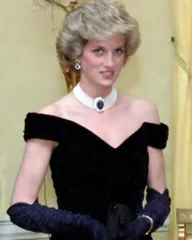
In the news1967
Legalization of the contraceptive pill
The 1967 Neuwirth Law legalized the contraceptive pill, allowing women greater control over family planning.
Also known as Princess Diana (nickname) · Lady Di (nickname) · The People's Princess (nickname)
Park House, 1 Jul 1961 – Pitié-Salpêtrière Hospital, 31 Aug 1997
15 facts3 sources
1 Jul 1961
Born in Park House
1981
Wedding of Charles, Prince of Wales, and Lady Diana Spencer
1982–1984
2 children are born
1995
An Interview with HRH The Princess of Wales
1997
Funeral of Diana, Princess of Wales
31 Aug 1997
Dies in Pitié-Salpêtrière Hospital, aged 36
She lived through 4 decades. Pick one to hear and see what it was like around Park House.
General history, not a record about the family: each item says where it comes from.
In the news1967
The 1967 Neuwirth Law legalized the contraceptive pill, allowing women greater control over family planning.
Getting around
Work commute times remained stable
The average time for a work commute in Britain remained remarkably stable, averaging roughly 33 to 34 minutes during the 1950s and 1960s.
At the table
Limited crisp flavors for many years
Until 1962, potato crisps were available in only three flavors: potato, plain, or salted, before cheese and onion was introduced.
 Around the world · 1969
People walk on the Moon. Neil Armstrong and Buzz Aldrin walked on the Moon, watched live on television by some 600 million people.
What people wore
Everyday wear and voluminous party skirts
Women wore floral pinafores as everyday house wear and favoured full-skirted dresses with stiffened petticoats for special occasions. These skirts were sometimes so voluminous that they made it difficult for women to pass through doorways.
Music
Concertina revival among young people
In the late 1960s and 1970s, young people began reclaiming concertinas from junk shops and attics, making them a key instrument for accompanying traditional song in the folk revival.
Daily life
Manual housework and outdoor facilities
Many homes lacked modern appliances, so housework was manual and time-consuming, and people often stored food in larders instead of fridges. Outdoor toilets and washing in tin baths in front of the fire were common for some families during this time.