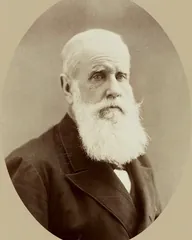
The collection records Pedro II’s birth in Rio de Janeiro on 2 December 1825. His parents were Pedro I of Brazil and Maria Leopoldina of Austria, linking his life to the preceding imperial generation. 1Birth · 2 Dec 1825, Rio de Janeiro · Probable2Parent · Pedro I of Brazil · Confirmed3Parent · Maria Leopoldina of Austria · Confirmed
His title as Emperor of Brazil spans 1831 to 1889 in the collection. Within that long reign, two distinct milestones appear: the declaration of his majority in 1840 and his coronation in 1841. The dates distinguish the beginning of his reign from the later ceremony. 4Title · Emperor of Brazil, 1831–1889 · Confirmed5Event · Declaration of age of Pedro II, 1840 · Confirmed6Event · coronation of Pedro II of Brazil, 1841 · Confirmed
A recorded union connects Pedro II to Teresa Cristina of the Two Sicilies. The collection links the end of his reign to the proclamation of the Republic in 1889 and records his death in Paris on 5 December 1891. These records bring together the family relationship, the imperial office and the closing dates of his life. 7Union · Teresa Cristina of the Two Sicilies · Confirmed8Event · Proclamation of the Republic, 1889 · Confirmed9Death · 5 Dec 1891, Paris · Probable


%20{%20.f%20{%20fill:%20%23EE7466%20}%20.s%20{%20stroke:%20%23EE7466%20}%20}%3c/style%3e%3cdefs%3e%3cfilter%20id='ink-fav'%20x='-5%25'%20y='-5%25'%20width='110%25'%20height='110%25'%3e%3cfeTurbulence%20type='fractalNoise'%20baseFrequency='0.9'%20numOctaves='2'%20seed='7'%20result='n'/%3e%3cfeDisplacementMap%20in='SourceGraphic'%20in2='n'%20scale='2.2'%20result='d'/%3e%3cfeTurbulence%20type='fractalNoise'%20baseFrequency='0.05'%20numOctaves='3'%20seed='18'%20result='blot'/%3e%3cfeColorMatrix%20in='blot'%20type='matrix'%20values='0%200%200%200%200%200%200%200%200%200%200%200%200%200%200%200%200%200%20-1.5%201.62'%20result='m1'/%3e%3cfeTurbulence%20type='fractalNoise'%20baseFrequency='1.6'%20numOctaves='1'%20seed='12'%20result='grain'/%3e%3cfeColorMatrix%20in='grain'%20type='matrix'%20values='0%200%200%200%200%200%200%200%200%200%200%200%200%200%200%200%200%200%20-2.4%202.25'%20result='m2'/%3e%3cfeComposite%20in='m1'%20in2='m2'%20operator='arithmetic'%20k1='1'/%3e%3cfeComposite%20in='d'%20operator='in'/%3e%3c/filter%3e%3c/defs%3e%3cg%20filter='url(%23ink-fav)'%20transform='rotate(-6%2080%2080)'%3e%3ccircle%20class='s'%20cx='80'%20cy='80'%20r='69'%20fill='none'%20stroke-width='16'/%3e%3cpath%20class='f'%20d='M47.33%2044.42Q46.25%2041.94%2045.01%2040.64Q43.77%2039.35%2041.71%2038.75Q39.66%2038.16%2035.67%2037.84L35.67%2033.84L80.16%2033.84L80.16%2037.84Q74.11%2038.27%2071.85%2039.13Q69.58%2040%2069.58%2042.05Q69.58%2043.24%2070.23%2045.07L86.32%2089.57L86.97%2089.57L102.3%2049.61Q103.38%2046.8%20103.38%2044.75Q103.38%2041.83%20100.68%2040.27Q97.98%2038.7%2091.39%2037.84L91.39%2033.84L124.77%2033.84L124.77%2037.84Q119.69%2038.59%20117.15%2039.67Q114.61%2040.75%20113.05%2042.97Q111.48%2045.18%20109.65%2049.82L82.97%20118.08L77.79%20118.08L47.33%2044.42Z'/%3e%3c/g%3e%3c/svg%3e)